
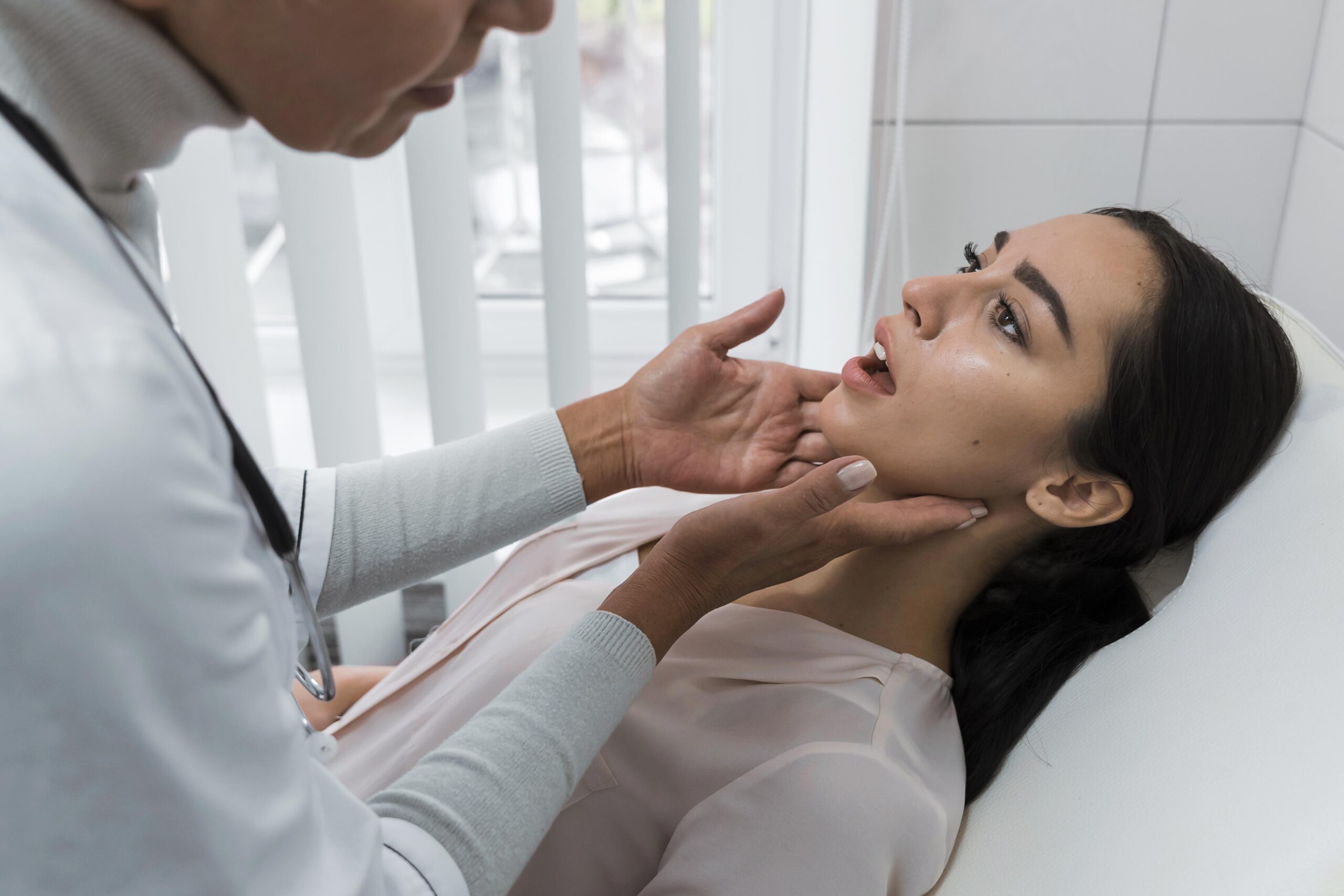
A thyroid nodule is a lump or abnormal area that develops inside the thyroid gland. Thyroid nodules are common, and most are non-cancerous. However, every newly discovered nodule should be evaluated properly because a small number may be associated with thyroid cancer.
The process of Thyroid nodule diagnosis in Trivandrum usually starts with a medical examination and thyroid blood tests. Doctors may then recommend a thyroid ultrasound to understand the size and appearance of the nodule. Depending on the ultrasound findings and other risk factors, a fine-needle aspiration biopsy, commonly called FNAC or FNA, may be advised.
Understanding how thyroid nodules are diagnosed can help patients know what to expect and why different tests may be recommended.
What Is a Thyroid Nodule?
The thyroid is a butterfly-shaped gland located at the front of the neck. It produces hormones that help regulate metabolism, energy use, body temperature, heart function, and several other body processes.
A thyroid nodule is an abnormal growth of thyroid cells that forms a lump within the gland. Nodules can be solid, fluid-filled, or partly solid and partly cystic.
Many thyroid nodules do not cause symptoms and are found during a routine examination or through imaging performed for another reason. The American Thyroid Association notes that most thyroid nodules are benign, although a small proportion contain thyroid cancer.
What Causes Thyroid Nodules?
There is not always one clear cause for a thyroid nodule. Several thyroid conditions can be associated with nodule formation.
Possible causes and related conditions include:
- Benign growth of thyroid tissue
- Thyroid cysts
- Multinodular goitre
- Hashimoto’s thyroiditis
- Iodine-related thyroid changes
- Thyroid adenomas
- Certain types of thyroid cancer
Having a thyroid nodule does not mean that a person has cancer. Proper evaluation is needed to determine whether the nodule is low-risk, requires monitoring, or needs further investigation.
What Are the Symptoms of a Thyroid Nodule?
Many thyroid nodules do not produce noticeable symptoms.
A person may discover a nodule as a lump or swelling in the front of the neck. Larger nodules may sometimes cause pressure on nearby structures.
Possible symptoms include:
- A visible lump in the neck
- A feeling of pressure in the throat
- Difficulty swallowing
- Difficulty breathing
- Hoarseness or voice changes
- Neck discomfort
- A feeling that something is stuck in the throat
Some nodules can produce excess thyroid hormone. In such cases, symptoms of an overactive thyroid may occur, such as a rapid heartbeat, increased sweating, nervousness, or unexplained weight loss.
However, these symptoms can have many possible causes. A medical assessment is needed before linking them to a thyroid nodule.
How Is a Thyroid Nodule Diagnosed?
Thyroid nodule diagnosis in Trivandrum may involve several steps. Not every patient needs every test. The doctor decides what is appropriate based on the patient’s symptoms, medical history, examination, and initial test results.
1. Medical History and Physical Examination
The first step is usually a consultation with a doctor.
The doctor may ask about:
- When the lump was first noticed
- Whether it has increased in size
- Previous thyroid problems
- Family history of thyroid disease or thyroid cancer
- Previous radiation exposure involving the neck
- Difficulty swallowing or breathing
- Voice changes
- Previous thyroid surgery
- Symptoms of high or low thyroid hormone levels
The doctor may feel the thyroid gland and surrounding neck area to determine whether the gland is enlarged and whether there are one or multiple nodules.
A physical examination alone cannot reliably determine whether a thyroid nodule is benign or cancerous. Additional tests are often needed.
2. Thyroid Blood Tests
Blood tests are an important part of the initial evaluation.
The doctor may check thyroid-stimulating hormone, or TSH, along with other thyroid hormone levels when appropriate.
These tests help determine whether the thyroid is functioning normally, is underactive, or is overactive.
However, normal thyroid blood test results do not automatically mean that a nodule is harmless. Many thyroid nodules, including some cancerous nodules, occur in people whose thyroid hormone levels are normal.
This is why blood tests are combined with imaging and other investigations when necessary.
3. Thyroid Ultrasound
Thyroid ultrasound is one of the most important tests used to evaluate a thyroid nodule.
It uses high-frequency sound waves to create images of the thyroid and does not involve radiation. Ultrasound can provide information about:
- Nodule size
- Nodule location
- Whether the nodule is solid or cystic
- Nodule shape
- Nodule margins
- Internal characteristics
- Calcifications
- Nearby lymph nodes
Doctors use these features to estimate the risk level of a nodule and decide whether additional testing is necessary.
Current thyroid nodule guidelines and risk-stratification systems use ultrasound characteristics to help identify nodules that may require biopsy. The American Thyroid Association describes ultrasound as a key tool in thyroid nodule evaluation.
4. Fine-Needle Aspiration Biopsy
Fine-needle aspiration, or FNA, is a commonly used procedure for evaluating thyroid nodules when a biopsy is indicated.
During the procedure, a very thin needle is inserted into the thyroid nodule to collect a small sample of cells. Ultrasound guidance is commonly used to help position the needle accurately.
The sample is then examined by a pathologist under a microscope.
FNA is generally a simple procedure and is often performed without the need for hospital admission. The American Thyroid Association describes ultrasound-guided FNA as a safe and important method for evaluating selected thyroid nodules.
Does Every Thyroid Nodule Need a Biopsy?
No.
A thyroid nodule is not automatically biopsied just because it exists. The decision depends on factors such as:
- Nodule size
- Ultrasound appearance
- Risk category
- Patient’s medical history
- Family history
- Previous radiation exposure
- Presence of suspicious lymph nodes
- Changes in the nodule over time
Ultrasound-based risk assessment helps doctors decide which nodules are more likely to need FNA. This approach can reduce unnecessary biopsies while ensuring that suspicious nodules receive appropriate evaluation.
Understanding Thyroid Biopsy Results
FNA results can fall into several categories.
Benign
A benign result means that the cells do not show evidence of cancer. Depending on the ultrasound appearance and other factors, the nodule may simply need periodic monitoring.
Malignant
A malignant result indicates cancerous cells. Further treatment planning, usually involving a thyroid specialist and surgeon, is then required.
Suspicious or Indeterminate
Sometimes the cells do not provide a definite answer. The doctor may recommend repeat FNA, additional testing, molecular testing where appropriate, monitoring, or surgery depending on the specific result.
Non-Diagnostic
A sample may occasionally contain too few cells or may not be suitable for a clear diagnosis. A repeat biopsy may then be recommended.
The Bethesda System is commonly used to classify thyroid FNA results.
What Is the Role of Molecular Testing?
Some thyroid nodules produce indeterminate biopsy results. In selected cases, molecular tests can provide additional information about the likelihood of cancer.
These tests examine genetic changes associated with thyroid nodules and may help doctors make decisions about monitoring or surgery.
Molecular testing is not necessary for every thyroid nodule. Its usefulness depends on the biopsy result, available testing, clinical circumstances, and local medical practice.
When Is a Thyroid Scan Used?
A nuclear thyroid scan is not usually the first imaging test for most thyroid nodules.
It may be useful in selected patients, particularly when the TSH level is low and the doctor suspects that the nodule may be producing excess thyroid hormone.
The scan can help identify whether a nodule is functioning or non-functioning. Most thyroid nodules, however, are initially assessed with ultrasound and, when appropriate, FNA.
What Happens After a Benign Diagnosis?
A benign nodule may not require immediate treatment.
Depending on its size, ultrasound appearance, symptoms, and other factors, the doctor may recommend observation and follow-up ultrasound.
Follow-up allows doctors to check whether the nodule:
- Remains stable
- Becomes smaller
- Increases in size
- Develops new suspicious features
A benign nodule may sometimes require additional evaluation if it grows significantly or begins causing pressure-related symptoms.
When Is Surgery Considered?
Surgery is not necessary for every thyroid nodule.
It may be considered when:
- Biopsy confirms thyroid cancer
- A nodule is highly suspicious for cancer
- A nodule causes significant pressure symptoms
- A nodule continues to grow or develops concerning features
- Certain indeterminate biopsy results require surgical diagnosis
- A large goitre causes breathing or swallowing problems
The appropriate operation depends on the diagnosis and extent of the thyroid condition.
Why Early Evaluation Matters
Finding a thyroid lump can naturally cause concern, but it is important to remember that most thyroid nodules are benign.
At the same time, ignoring a persistent or enlarging neck lump is not advisable. Proper assessment can help identify patients who need treatment and allow low-risk nodules to be monitored safely.
Ultrasound has become a central part of thyroid nodule assessment because it provides detailed information about the nodule and helps guide decisions about biopsy.
Who Should Consider Seeing a Thyroid Specialist?
You should consider consulting a doctor if you notice:
- A new lump in the neck
- A lump that is growing
- Persistent hoarseness
- Difficulty swallowing
- Difficulty breathing
- Enlarged lymph nodes
- Symptoms suggesting thyroid hormone imbalance
- A thyroid nodule found incidentally on another scan
People with a family history of thyroid cancer or previous radiation exposure involving the neck may also require careful assessment.
Choosing a Thyroid Specialist in Trivandrum
When looking for Thyroid nodule diagnosis in Trivandrum, patients may benefit from choosing a centre where consultation, thyroid blood testing, ultrasound, biopsy, pathology, and follow-up care can be coordinated.
Important factors to consider include:
- Experience of the thyroid or endocrine specialist
- Availability of high-quality thyroid ultrasound
- Ultrasound-guided FNAC facilities
- Access to experienced pathology services
- Endocrinology consultation
- Surgical consultation when required
- Follow-up facilities
- Multidisciplinary care for complex cases
Akna Health is the clinic requested for the backlink in this article and is described in the brief as the Thyroid Specialist in Trivandrum. Patients should discuss their individual symptoms, test results, diagnosis, and treatment options with a qualified medical professional.
How Should You Prepare for Your Appointment?
Before visiting a thyroid specialist, it can be useful to bring:
- Previous thyroid ultrasound reports
- Blood test results
- Previous biopsy reports
- List of current medicines
- Previous thyroid treatment records
- Relevant family medical history
- Reports from other neck or chest imaging
You should also make a note of when you first noticed the lump and whether you have experienced any changes in its size or associated symptoms.
Conclusion
Thyroid nodule diagnosis in Trivandrum generally involves a combination of physical examination, thyroid blood tests, ultrasound, and FNA biopsy when appropriate. Each test provides different information, helping doctors understand the nature and risk level of a thyroid nodule.
Most thyroid nodules are benign, but proper evaluation is important because a small percentage may be cancerous. Ultrasound plays an important role in identifying suspicious characteristics, while FNA can provide information about the cells within a nodule.
If you have discovered a lump in your neck or have been told that you have a thyroid nodule, avoid assuming that it is cancer or that it will require surgery. Speak with a qualified thyroid specialist and follow the recommended evaluation process. Early and appropriate assessment can help ensure that patients receive the right care for their individual condition.
FAQS
1. What is the first test for a thyroid nodule?
A doctor will generally begin with a medical examination and thyroid blood tests. A thyroid ultrasound is then an important part of evaluating the nodule and determining whether further investigation is needed.
2. Does every thyroid nodule require FNAC?
No. The decision to perform FNAC depends on the nodule’s size, ultrasound characteristics, risk factors, and clinical findings.
3. Does a thyroid nodule always mean cancer?
No. Most thyroid nodules are benign. However, appropriate assessment is needed to identify nodules that may require further investigation.
4. Is thyroid FNAC painful?
FNAC uses a very thin needle. Patients may experience brief pressure or discomfort during the procedure, but it is generally considered a simple and safe procedure.
5. Can blood tests identify thyroid cancer?
Blood tests help assess thyroid function but generally cannot determine whether a thyroid nodule is cancerous. Ultrasound and, when indicated, FNA provide additional information.