
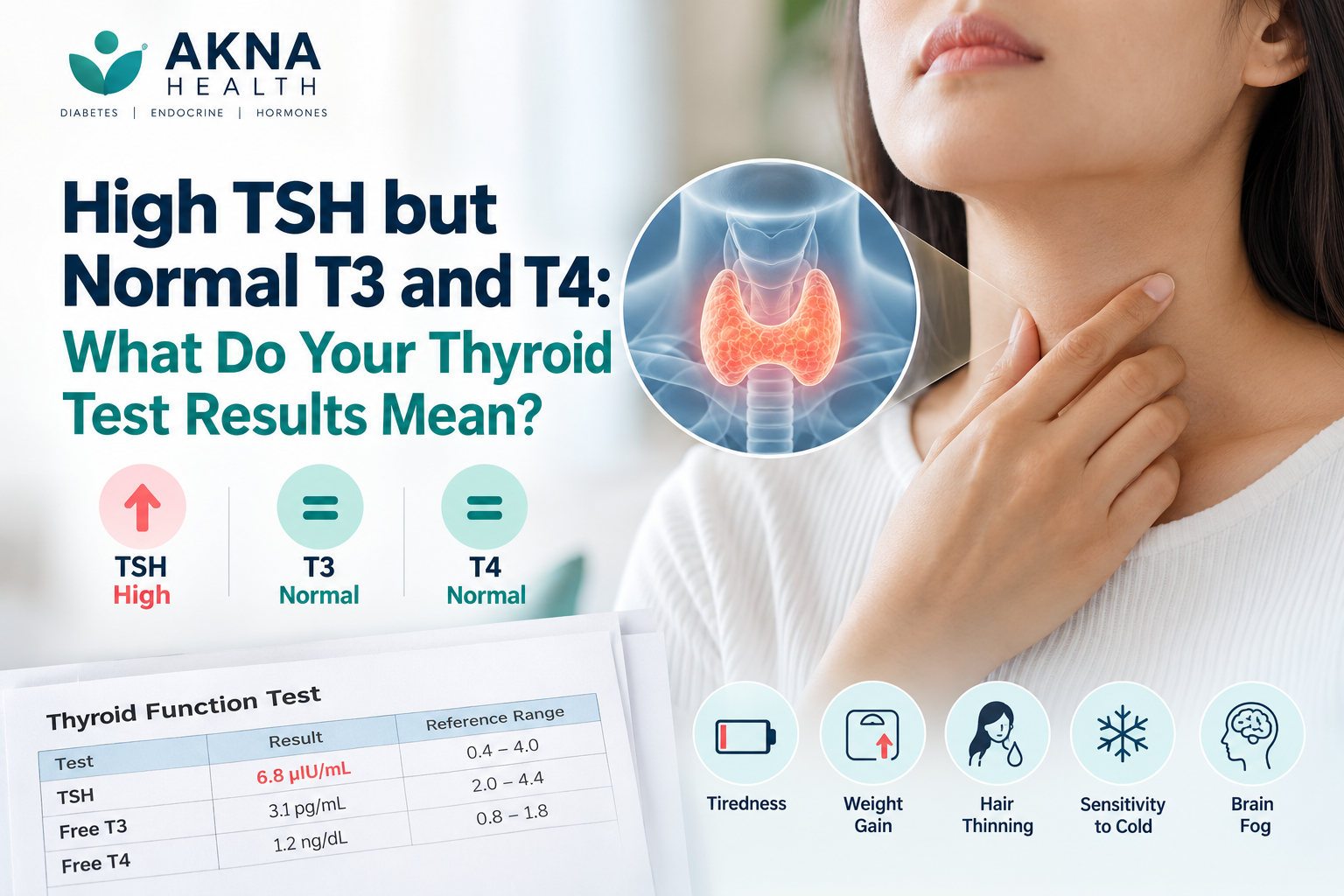
Have you recently taken a thyroid function test and discovered that your TSH level is high while your T3 and T4 levels remain within the normal range? This result can be confusing, especially if you do not experience obvious symptoms.
A high TSH level with normal T3 and T4 may indicate a condition called subclinical hypothyroidism. It means your thyroid gland may be beginning to function less efficiently, but your thyroid hormone levels are still within the laboratory’s reference ranges.
However, a single abnormal test result does not always mean you have a thyroid disorder that requires treatment. Your symptoms, medical history, medications, age, and repeat test results all help determine what the findings mean.
Understanding your thyroid function test can help you take the right next steps and discuss appropriate care with your doctor.
What Is TSH, and Why Is It Important?
TSH stands for thyroid-stimulating hormone. It is produced by the pituitary gland, a small gland located at the base of your brain.
TSH signals your thyroid gland to produce thyroid hormones, primarily thyroxine (T4) and triiodothyronine (T3). These hormones help regulate metabolism, body temperature, energy levels, heart rate, digestion, and several other essential functions.
When thyroid hormone production becomes insufficient, the pituitary gland may release more TSH to encourage the thyroid to work harder.
This is why TSH can become elevated even when T3 and T4 levels are still normal.
What Does High TSH With Normal T3 and T4 Mean?
When your TSH is above the laboratory’s reference range but your free T4 remains normal, your doctor may consider subclinical hypothyroidism.
In this condition, the thyroid gland may be experiencing early or mild underactivity. The body compensates by increasing TSH production to maintain normal thyroid hormone levels.
The term “subclinical” does not necessarily mean that the condition is unimportant or that you will never develop symptoms. Some people feel completely normal, while others experience symptoms associated with an underactive thyroid.
Your doctor may also consider temporary changes in thyroid function, recovery from a recent illness, medication effects, or laboratory variation before confirming a diagnosis.
It is important to distinguish between total T3/T4 and free T4 results. The interpretation depends on which tests were performed and the reference ranges used by the laboratory.
Common Causes of High TSH With Normal T3 and T4
Several factors may explain why your TSH is elevated despite normal thyroid hormone levels.
1. Early Hashimoto’s Thyroiditis
Hashimoto’s thyroiditis is an autoimmune condition in which the immune system affects the thyroid gland. Over time, this may reduce the gland’s ability to produce thyroid hormones.
An elevated TSH level can appear before free T4 becomes low. Your doctor may recommend thyroid peroxidase antibodies (TPO antibodies) to help assess whether an autoimmune thyroid condition is present.
2. Iodine Imbalance
Iodine is necessary for thyroid hormone production. Both insufficient iodine intake and excessive iodine exposure can affect thyroid function.
Do not start iodine supplements or high-dose nutritional products without medical advice, as excess iodine may worsen certain thyroid conditions.
3. Thyroid Medication Issues
If you already take medication for hypothyroidism, your TSH may remain elevated because the dose needs adjustment, doses are missed, or the medicine is not being absorbed properly.
Some supplements and medicines can interfere with thyroid medication absorption. Calcium and iron supplements, for example, may need to be taken separately from levothyroxine according to your doctor’s instructions.
Do not increase or decrease your medication dose on your own.
4. Temporary Changes After Illness
Thyroid test results can change during or after certain illnesses. In some cases, TSH may temporarily rise as the body recovers.
Your doctor may recommend repeating the test after an appropriate interval rather than making an immediate treatment decision.
5. Age and Individual Variation
TSH levels can vary with age, time of day, and individual circumstances. Reference ranges may also differ between laboratories.
A result that is only slightly above the standard reference range may need a different approach from a substantially elevated or persistently abnormal result.
Symptoms of Subclinical Hypothyroidism
Many people with high TSH and normal T3 and T4 have no noticeable symptoms. Others may experience symptoms associated with reduced thyroid activity.
Possible symptoms include:
- Persistent tiredness or low energy
- Increased sensitivity to cold
- Unexplained weight gain or difficulty managing weight
- Dry skin
- Constipation
- Hair thinning or hair loss
- Difficulty concentrating or feeling mentally sluggish
- Low mood
- Menstrual irregularities
- Changes in cholesterol levels
These symptoms are not specific to thyroid disease. They can also occur because of other medical conditions, sleep problems, nutritional deficiencies, stress, or medication effects.
If you have ongoing symptoms, consult a healthcare professional rather than assuming that your thyroid result is the only cause.
How Is High TSH With Normal T3 and T4 Diagnosed?
Your doctor will interpret the laboratory results alongside your symptoms, medical history, physical examination, and other relevant findings.
The evaluation may include the following:
TSH Test
The TSH test measures how much thyroid-stimulating hormone is present in your blood. An elevated result can suggest that the thyroid is not producing enough hormone for the body’s needs.
Free T4 Test
Free T4 measures the unbound thyroxine available in the bloodstream. A high TSH with normal free T4 is consistent with subclinical hypothyroidism, while a high TSH with low free T4 may indicate overt hypothyroidism.
Thyroid Antibody Testing
Your doctor may recommend TPO antibody testing if an autoimmune thyroid condition is suspected. The result can help assess the likelihood of Hashimoto’s thyroiditis and may influence follow-up decisions.
Repeat Thyroid Function Testing
A repeat test may be recommended to determine whether the TSH elevation persists. The timing depends on the degree of elevation, symptoms, pregnancy status, recent illness, and other clinical factors.
If you are taking biotin supplements, tell your doctor before testing because biotin can interfere with some laboratory thyroid tests. Follow the laboratory’s or clinician’s instructions about whether and when to stop it before the blood test.
Does High TSH Always Require Treatment?
No. Treatment depends on the TSH level, whether the result remains elevated, the presence of symptoms, thyroid antibodies, age, cardiovascular risk factors, and pregnancy-related considerations.
For some people with a mildly elevated TSH and normal free T4, the doctor may recommend monitoring and repeat blood tests rather than immediate medication.
Levothyroxine, a synthetic thyroid hormone, may be considered when the TSH elevation is more substantial or persistent, or when specific symptoms and risk factors make treatment appropriate.
The decision should be individualized. Taking thyroid medication when it is not needed can lead to excessive thyroid hormone levels, which may affect the heart and bones.
Never start thyroid medication or change your dose without medical guidance.
High TSH and Pregnancy: What Should You Know?
Thyroid function is particularly important during pregnancy and when planning to conceive. Thyroid hormone requirements change during pregnancy, and the interpretation of TSH results depends on the stage of pregnancy and the appropriate reference ranges.
An elevated TSH during pregnancy may require prompt assessment. The appropriate treatment threshold can differ from that used for people who are not pregnant.
If you are pregnant, trying to conceive, or receiving fertility treatment, discuss your thyroid results with your doctor without delaying follow-up. Do not rely on general reference ranges or self-medicate based on an online interpretation.
Can Lifestyle Changes Help Support Thyroid Health?
Healthy habits can support overall health, but they cannot reliably correct every cause of an elevated TSH.
Consider the following practical steps:
- Eat a balanced diet that provides adequate nutrition.
- Use iodized salt in moderation where appropriate, while avoiding excessive iodine intake.
- Get sufficient sleep and maintain regular physical activity.
- Take prescribed thyroid medication exactly as instructed.
- Tell your doctor about supplements, herbal products, and other medicines you use.
- Attend follow-up appointments and repeat tests when recommended.
Avoid taking thyroid-support supplements without professional advice. Products marketed for thyroid health may contain excessive iodine or ingredients that can interfere with treatment.
When Should You Consult a Doctor?
Arrange a medical consultation if your TSH is above the reference range, particularly if the elevation persists or you have symptoms.
You should seek timely medical advice if you are pregnant, planning a pregnancy, undergoing fertility treatment, already taking thyroid medication, or have a history of thyroid disease.
Your doctor can determine whether repeat testing, antibody testing, treatment, or routine monitoring is appropriate for your situation.
If you experience severe or rapidly worsening symptoms, seek urgent medical assessment rather than waiting for a routine thyroid appointment.
Frequently Asked Questions
1. Is high TSH with normal T3 and T4 dangerous?
Not necessarily. This pattern often indicates possible subclinical hypothyroidism, but the significance depends on how high the TSH is, whether the result persists, your symptoms, and other risk factors. Medical follow-up helps determine whether monitoring or treatment is appropriate.
2. Can high TSH return to normal without medication?
Yes, TSH can return to the reference range in some people, particularly when the elevation is temporary. However, persistent elevation may indicate an ongoing thyroid problem. Your doctor may recommend repeat testing before deciding on treatment.
3. Can I have symptoms even when T3 and T4 are normal?
Yes. Some people with subclinical hypothyroidism report fatigue, constipation, dry skin, or other symptoms. These symptoms can have several causes, so a clinician should assess them in context.
4. Does high TSH mean I will gain weight?
Not necessarily. Some people with reduced thyroid function experience weight changes, but weight gain has many possible causes. A mildly elevated TSH with normal thyroid hormone levels does not automatically explain weight gain.
5. How often should I check my thyroid levels?
The appropriate interval depends on your results, symptoms, pregnancy status, medication use, and medical history. Your doctor may recommend repeat testing after a few months for a mild, newly detected elevation, or sooner when clinical circumstances require it.
6. Should I take thyroid medicine if my TSH is slightly high?
Not automatically. Some people benefit from treatment, while others need monitoring alone. Your doctor should consider the degree and persistence of the elevation, symptoms, antibody results, age, and pregnancy-related factors before recommending medication.
Conclusion
High TSH with normal T3 and T4 can indicate early or mild thyroid underactivity, often described as subclinical hypothyroidism. However, the result must be interpreted in context, and a single abnormal test does not always mean you need medication.
Understanding your thyroid results, identifying possible causes, and following your doctor’s recommendations can help you make informed decisions about your health.
If you have an elevated TSH result or ongoing symptoms, consult a qualified healthcare professional for an individualized assessment. Visit AKNA Health to learn more about available healthcare services and guidance for your health concerns.