
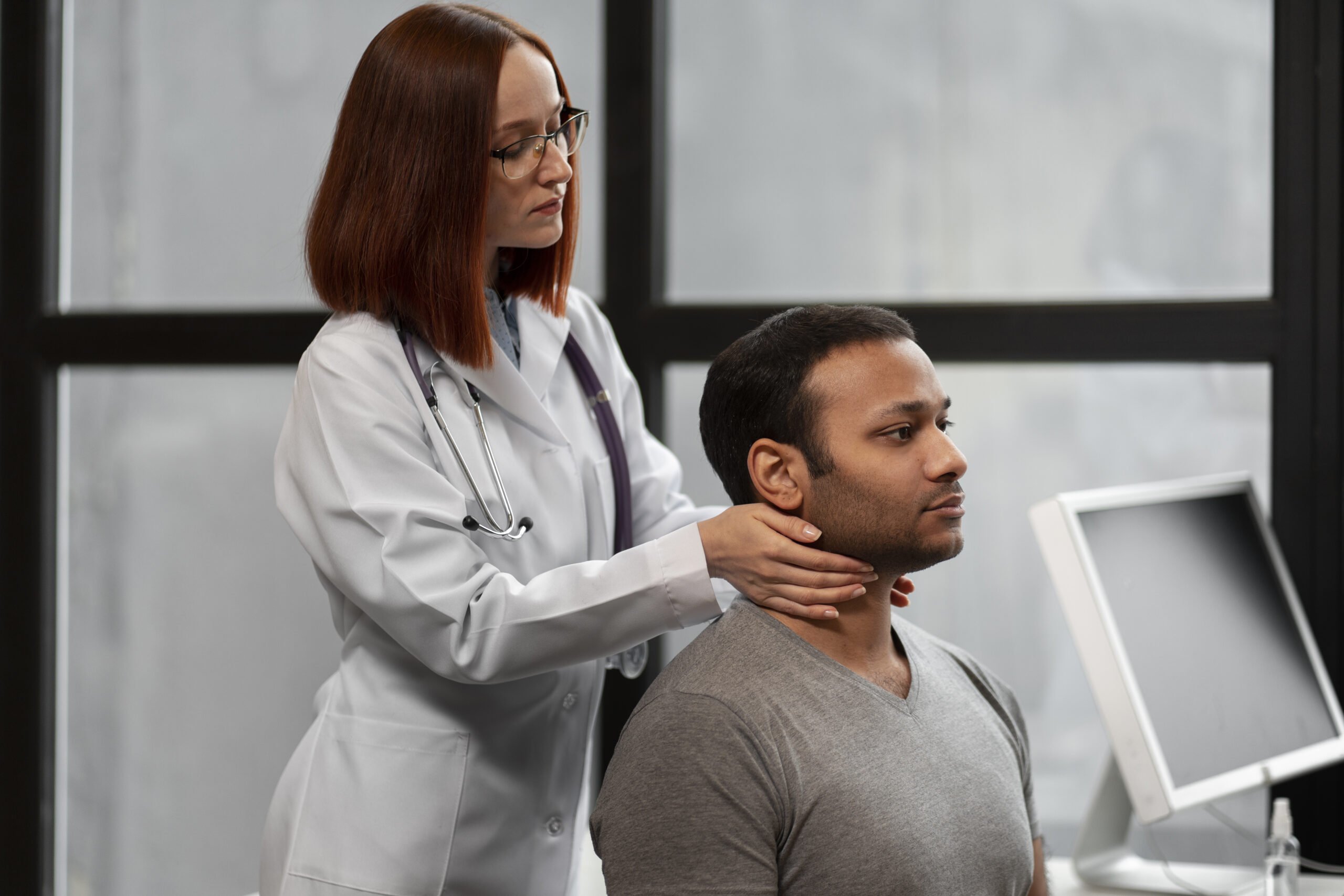
A thyroid nodule is a lump or abnormal growth that develops within the thyroid gland. Thyroid nodules are common, and most are benign. However, some nodules may require further testing to determine whether cancerous cells are present. Ultrasound examination and, when appropriate, fine-needle aspiration (FNA) biopsy are important parts of this evaluation.
For people searching for Thyroid biopsy in Trivandrum, understanding the procedure can help reduce anxiety and make it easier to discuss treatment options with a qualified doctor.
What Is a Thyroid Biopsy?
A thyroid biopsy is a procedure used to collect cells or tissue from a thyroid nodule so that they can be examined by a pathologist. The most common method is fine-needle aspiration biopsy (FNAB or FNA).
During an FNA, a very thin needle is inserted into the thyroid nodule. Several small samples may be collected from different areas of the nodule. Ultrasound is commonly used to guide the needle accurately into the target area. The procedure usually takes less than 30 minutes, and most people can return home shortly afterward.
A biopsy does not mean that a person has thyroid cancer. In fact, most thyroid nodules are not cancerous. The purpose of the biopsy is to identify which nodules need closer evaluation or treatment.
When Is a Thyroid Biopsy Recommended?
Not every thyroid nodule requires a biopsy. Doctors usually consider several factors before recommending one.
These may include:
- The appearance of the nodule on ultrasound
- The size of the nodule
- Suspicious ultrasound characteristics
- Changes in the nodule over time
- A history of thyroid cancer
- Certain risk factors or previous radiation exposure
- Enlarged lymph nodes in the neck
- Clinical findings from a physical examination
Modern ultrasound-based risk classification systems can help doctors decide which nodules are more likely to need biopsy. The American Thyroid Association notes that ultrasound is the main imaging test used to evaluate thyroid nodules and guide biopsy decisions.
A blood test such as TSH may also be performed as part of the overall thyroid evaluation. Depending on the findings, other tests may sometimes be recommended.
How Is a Thyroid Biopsy Performed?
Understanding the steps can make the procedure feel less stressful.
1. Positioning
You will usually lie on your back with your neck gently extended. A small pillow may be placed under the shoulders to make the thyroid easier to access.
2. Ultrasound Examination
The doctor may first examine the thyroid with an ultrasound probe. This helps identify the exact location and characteristics of the nodule.
3. Cleaning the Skin
The skin over the biopsy area is cleaned with an antiseptic solution to reduce the risk of infection.
4. Needle Insertion
A very thin needle is carefully inserted through the skin and into the thyroid nodule. Ultrasound guidance can help the doctor target the appropriate portion of the nodule.
5. Cell Collection
Several small samples may be collected. The needle may be moved gently within different portions of the nodule to obtain an adequate sample.
6. Sample Examination
The collected cells are sent to a laboratory where a pathologist examines them under a microscope.
The American Thyroid Association describes ultrasound-guided FNA as a simple and generally safe procedure.
Does Thyroid Biopsy Hurt?
Most people tolerate an FNA well. You may feel mild pressure, a brief pinching sensation, or temporary discomfort when the needle enters the skin.
The needle used for FNA is very thin. In many cases, local or topical anesthesia may be used, although it is not always necessary.
After the procedure, there may be mild soreness or a small bruise around the biopsy site. These effects usually settle quickly.
How Should You Prepare for a Thyroid Biopsy?
One benefit of FNA is that extensive preparation is usually not required.
However, it is important to tell your doctor about:
- Medicines you are taking
- Blood-thinning medicines
- Bleeding or clotting problems
- Previous thyroid procedures
- Allergies
- Other medical conditions
- Previous thyroid biopsy reports or ultrasound reports
Your doctor will advise you if any medication needs special consideration before the procedure. Do not stop prescribed medication on your own.
The American Thyroid Association notes that thyroid FNA generally does not require fasting, although individual instructions can vary depending on the procedure and the patient’s circumstances.
What Do Thyroid Biopsy Results Mean?
Thyroid biopsy results are commonly reported using the Bethesda System for Reporting Thyroid Cytopathology. This system provides standardized categories that help doctors determine the next step.
Results may be described as:
Benign
A benign result means that the cells do not show evidence of cancer. Depending on the ultrasound appearance and other factors, the doctor may recommend regular monitoring rather than surgery.
Malignant
A malignant result indicates that cancerous cells have been identified. Further treatment planning may involve an endocrinologist, thyroid surgeon, or other specialists.
Suspicious for Malignancy
This means the cells have features that raise concern for cancer but may not provide a definitive diagnosis. Additional evaluation, including possible surgery, may be discussed.
Indeterminate
Sometimes the cells cannot clearly be classified as benign or malignant. A repeat biopsy, molecular testing, surveillance, or surgery may be considered depending on the specific situation.
Non-Diagnostic
A non-diagnostic result means the sample did not contain enough suitable material to make a reliable diagnosis. A repeat biopsy may be recommended.
The appropriate next step depends on the biopsy category, ultrasound findings, nodule size, clinical history, and other individual factors.
What Happens After a Benign Biopsy?
A benign biopsy is reassuring, but follow-up may still be important.
Doctors may recommend repeat ultrasound examinations to monitor the nodule. If the nodule grows or develops new suspicious characteristics, another evaluation or biopsy may be needed.
This is particularly important because biopsy results should always be interpreted together with ultrasound and clinical findings. Recent American Thyroid Association information also highlights that the reliability of a benign biopsy can vary in some very large nodules, reinforcing the importance of individualized follow-up.
What If the Biopsy Is Indeterminate?
An indeterminate result does not automatically mean cancer.
Depending on the specific cytology category, your doctor may recommend:
- Repeating the FNA
- Reviewing the pathology
- Molecular testing when appropriate
- Continued ultrasound monitoring
- Surgical evaluation
Molecular testing can sometimes provide additional information for selected indeterminate thyroid nodules, although it is not necessary for every patient.
Are There Risks With Thyroid Biopsy?
FNA is generally considered a low-risk procedure. Temporary discomfort, mild swelling, or bruising can occur.
More serious complications are uncommon, but patients should follow the instructions given by their healthcare team and report unusual or persistent symptoms.
If you experience significant swelling, severe pain, bleeding that does not stop, breathing difficulty, or other concerning symptoms after the procedure, seek medical attention promptly.
Why Ultrasound Guidance Matters
Ultrasound provides a clear view of the thyroid and helps the doctor identify the location and structure of a nodule. During FNA, ultrasound guidance can help direct the needle into the intended area.
It can be particularly useful when nodules are small, located deep within the thyroid, or contain both solid and fluid-filled areas. The American Thyroid Association’s cytopathology guidance notes that ultrasound guidance is widely used for thyroid FNA and can improve the ability to obtain adequate samples.
Choosing a Thyroid Care Centre in Trivandrum
When arranging a thyroid biopsy, consider a centre where the evaluation process can be coordinated properly.
Important factors include:
- Access to thyroid ultrasound
- Experienced doctors
- Ultrasound-guided biopsy facilities
- Reliable pathology services
- Clear reporting of biopsy results
- Appropriate follow-up care
- Access to specialist consultation when required
For patients looking for thyroid evaluation and related care, you can learn more about Akna Health, the clinic referenced in this brief with the promotional descriptor “Thyroid Specialist in Trivandrum.” This descriptor is supplied for the article and is not presented here as an independent ranking.
When Should You See a Doctor?
You should discuss a thyroid lump or nodule with a doctor if you notice:
- A new lump in the neck
- A lump that appears to be growing
- Persistent difficulty swallowing
- A feeling of pressure in the neck
- Persistent hoarseness
- Enlarged lymph nodes
- A thyroid abnormality found during another scan
Most thyroid nodules are not cancerous, but proper evaluation helps determine which ones require monitoring or further investigation.
Conclusion
A thyroid biopsy is an important diagnostic procedure used to evaluate selected thyroid nodules. Fine-needle aspiration is usually quick, minimally invasive, and performed with ultrasound guidance. The biopsy helps doctors determine whether cells appear benign, malignant, indeterminate, or inadequate for diagnosis.
If you have been advised to undergo Thyroid biopsy in Trivandrum, it is natural to have questions about preparation, discomfort, results, and what happens afterward. Discuss your ultrasound findings and individual risk factors with your doctor so that the need for biopsy and the next steps can be decided appropriately.
Early evaluation does not mean that a thyroid nodule is cancerous. It simply helps ensure that suspicious nodules are investigated while many benign nodules can be safely monitored.
FAQs
1. Is thyroid biopsy painful?
Most people experience only mild pressure or brief discomfort. The needle used for FNA is very thin, and the procedure is generally well tolerated.
2. How long does a thyroid biopsy take?
The biopsy itself is usually completed within a short period, and the American Thyroid Association notes that the procedure generally takes less than 30 minutes.
3. Do I need to fast before a thyroid biopsy?
Fasting is generally not required for a routine thyroid FNA. However, follow the specific instructions given by your healthcare provider.
4. Does every thyroid nodule require a biopsy?
No. The decision depends on factors such as ultrasound appearance, size, clinical history, and other risk factors.
5. Can a thyroid biopsy detect cancer?
Yes. FNA can identify cells that are malignant or suspicious for malignancy. Some results may be indeterminate and require additional evaluation.